
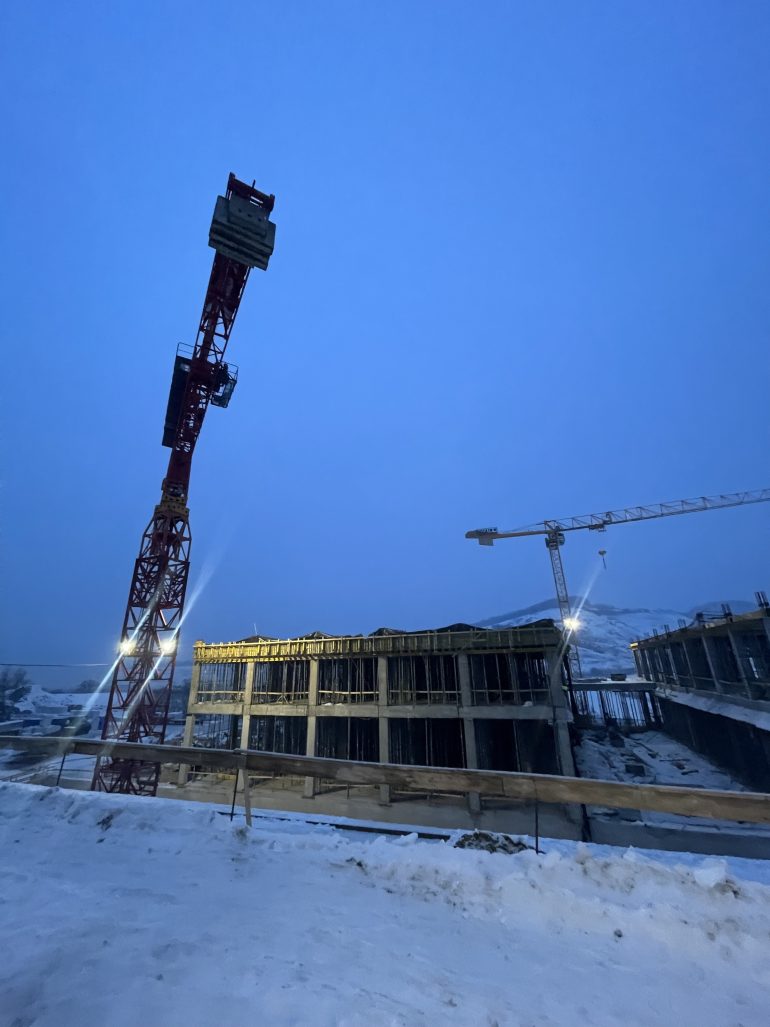

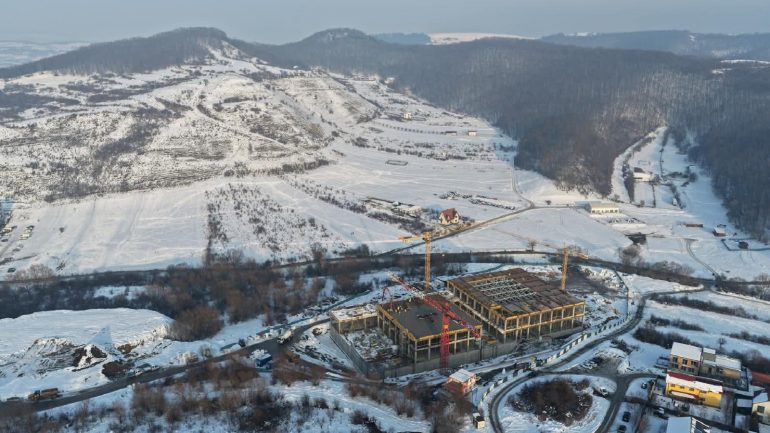
At UNITH2B, we believe that watching a building take shape is as profound as experiencing the finished work. The Historical Museum Complex of Transylvania now rises on the north-eastern slope of “La Fânață” hill. No longer just a vision in terracotta tones, it grows beam by beam from the Transylvanian earth. You can explore the full project vision in our initial project presentation.
From Blueprint to Bedrock
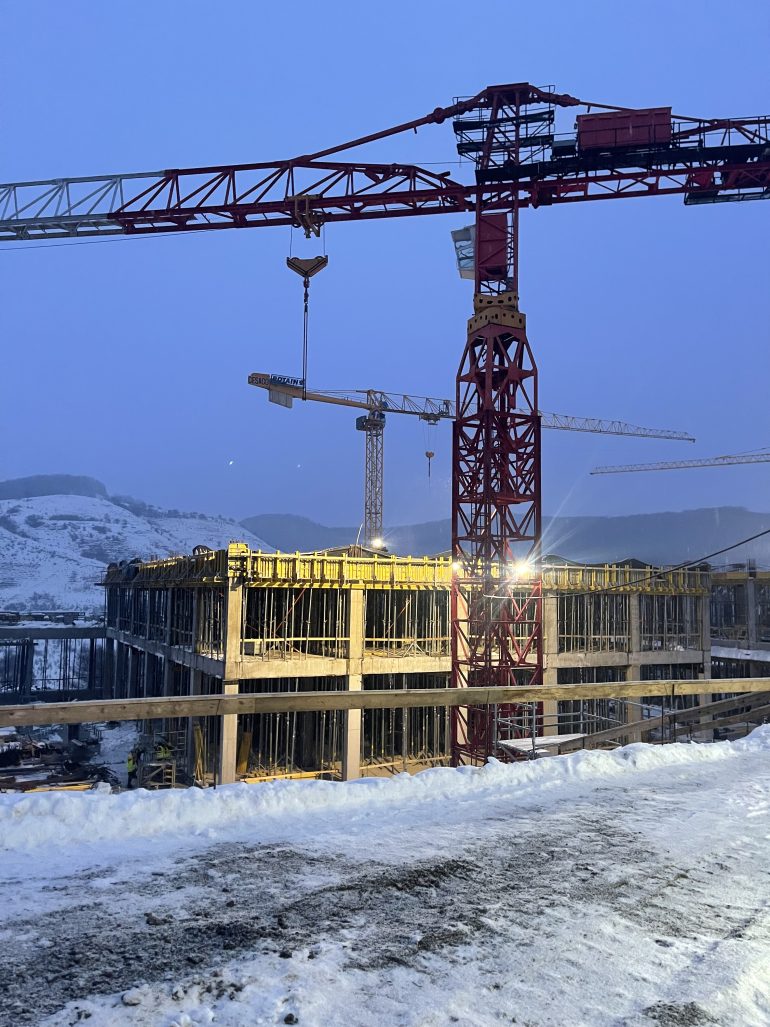
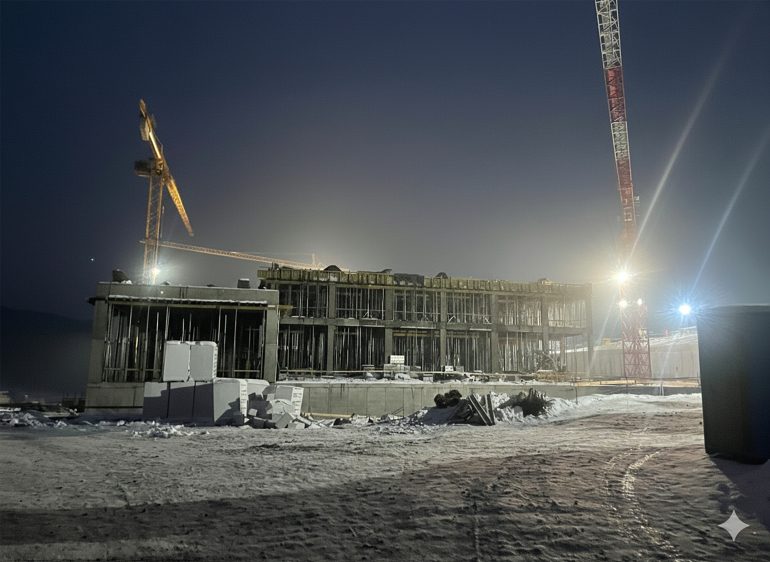
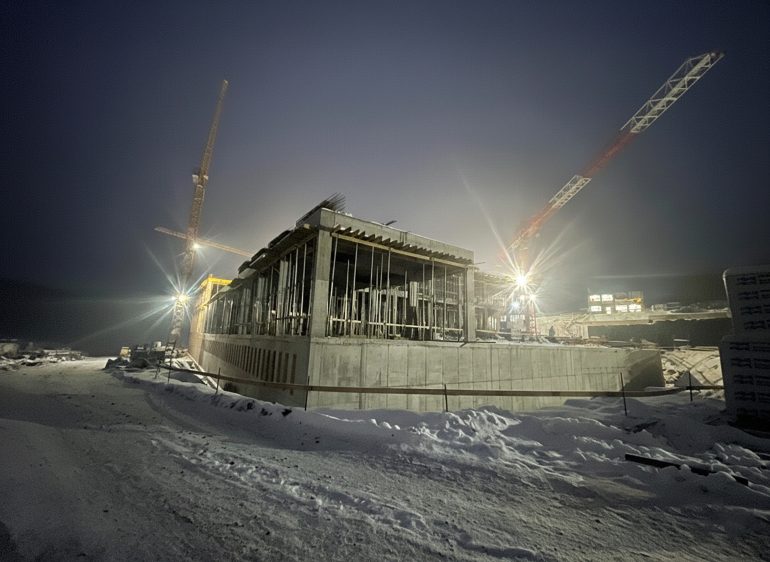
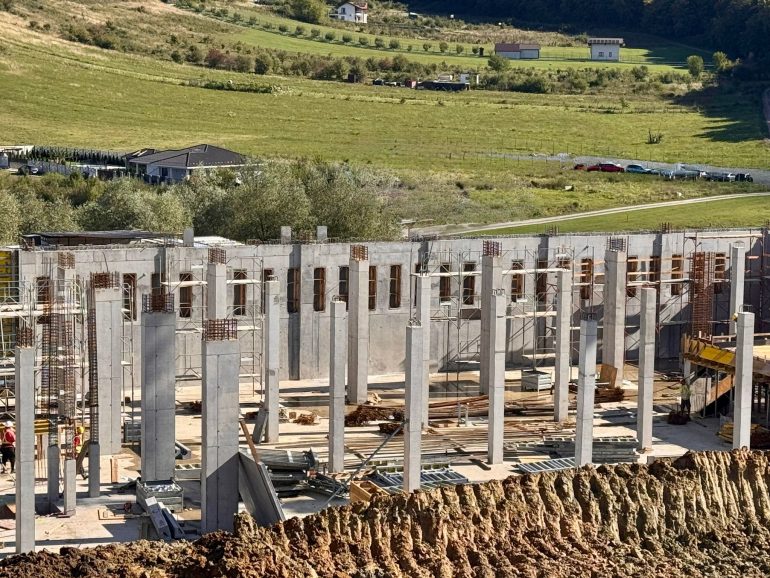
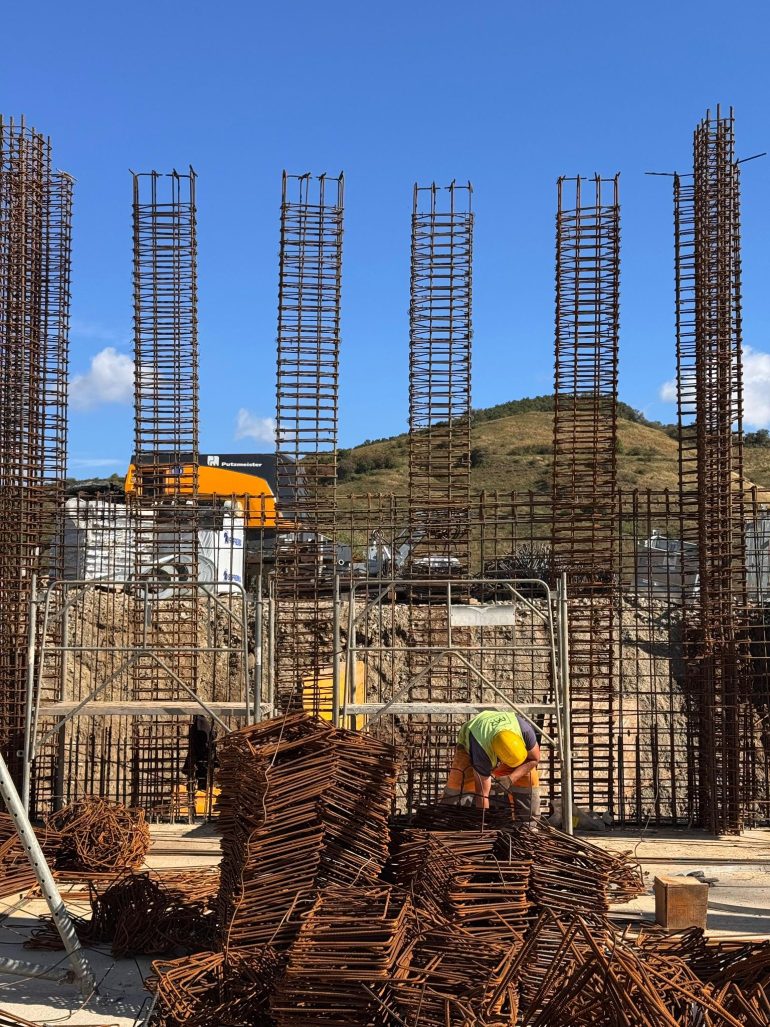
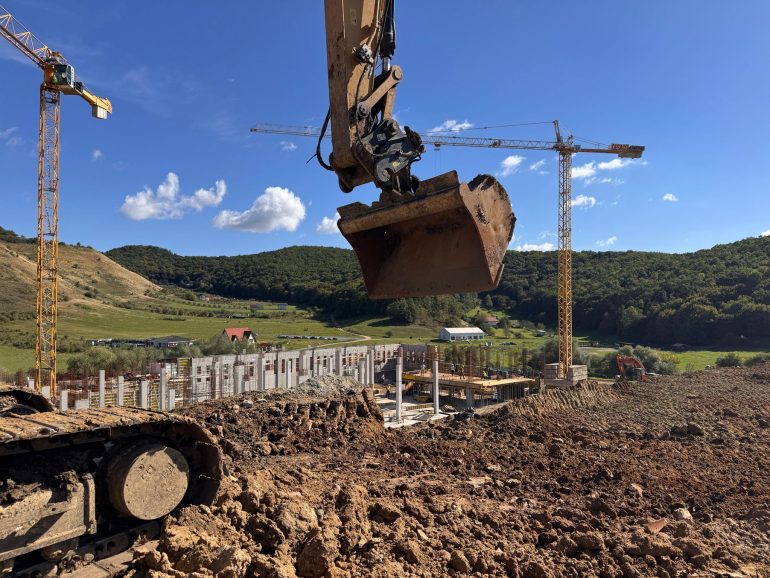
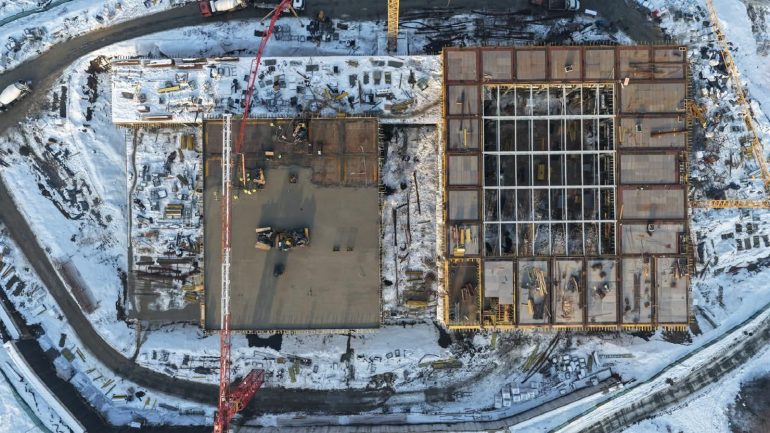
Construction began with a bold act of trust in the land. First, the construction team from our partner FAR FOUNDATION drove deep pile foundations into the site’s clay geology. Then, a carefully engineered raft system anchored the complex to the hillside. Today, the BIM-optimised concrete frame stands proud against the valley backdrop. Two monolithic volumes emerge exactly as envisioned. Their warm-hued bones await the pigmented skin that will mirror the region’s iron-rich soils.
A Structure That Speaks
The signature vertical reveals draw inspiration from Transylvania’s fortified churches. Workers have now cast these slender openings into the façades. As a result, walking the site reveals a rhythmic interplay of solid and void. Soon, daylight will filter into the exhibition halls below. At 16 metres above grade, the twin volumes remain respectful of the landscape. They anchor into the hillside rather than impose upon it.
Inside the Framework
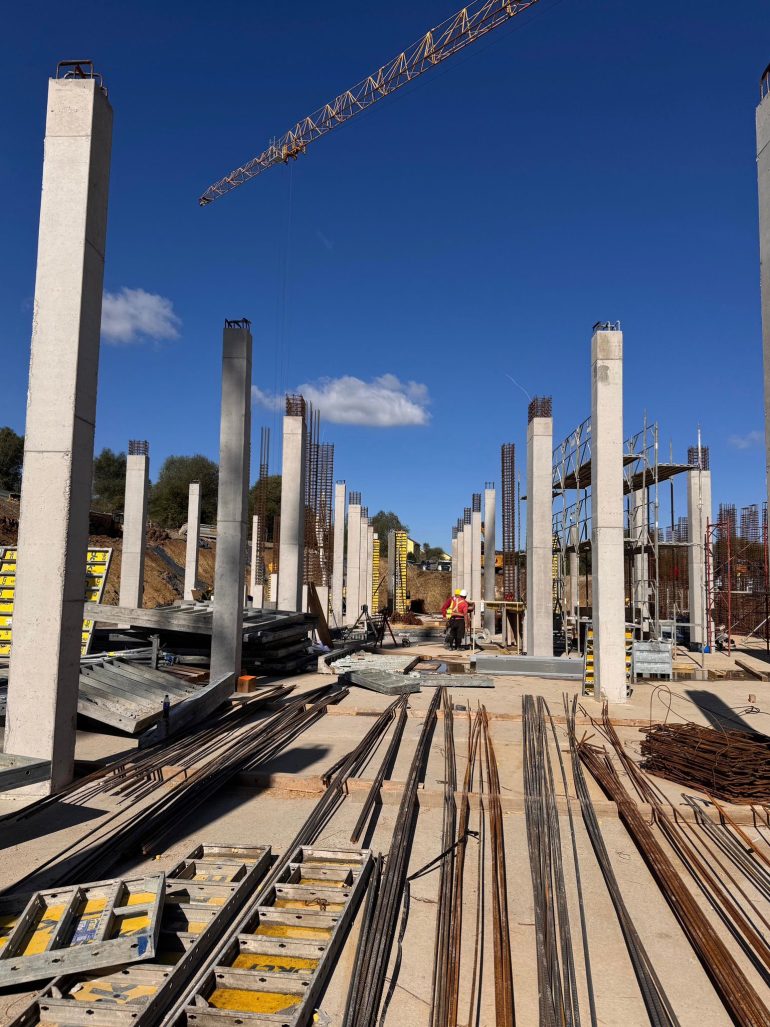
Within the 11,350 m² footprint, the spatial logic now becomes tangible. The generous 8-metre clear-span exhibition hall takes shape with its structural grid ready for flexible displays. Meanwhile, workers have poured floors and slabs for the conservation labs, the multi-purpose hall, and the workshop classrooms. These spaces will soon open onto the landscape terrace, blending learning with the outdoors. Currently, temporary shoring supports the fresh concrete as it cures. At the same time, masons begin the interior partitions for climate-controlled storage vaults.
Building Through the Seasons
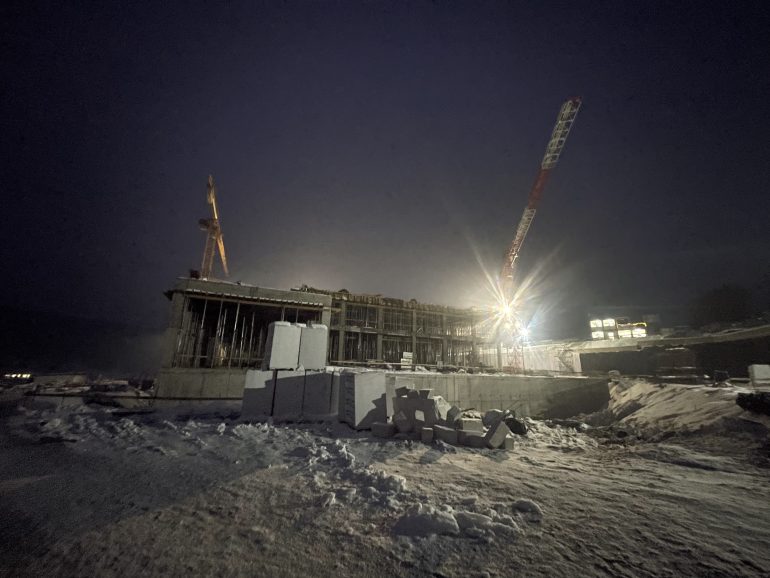
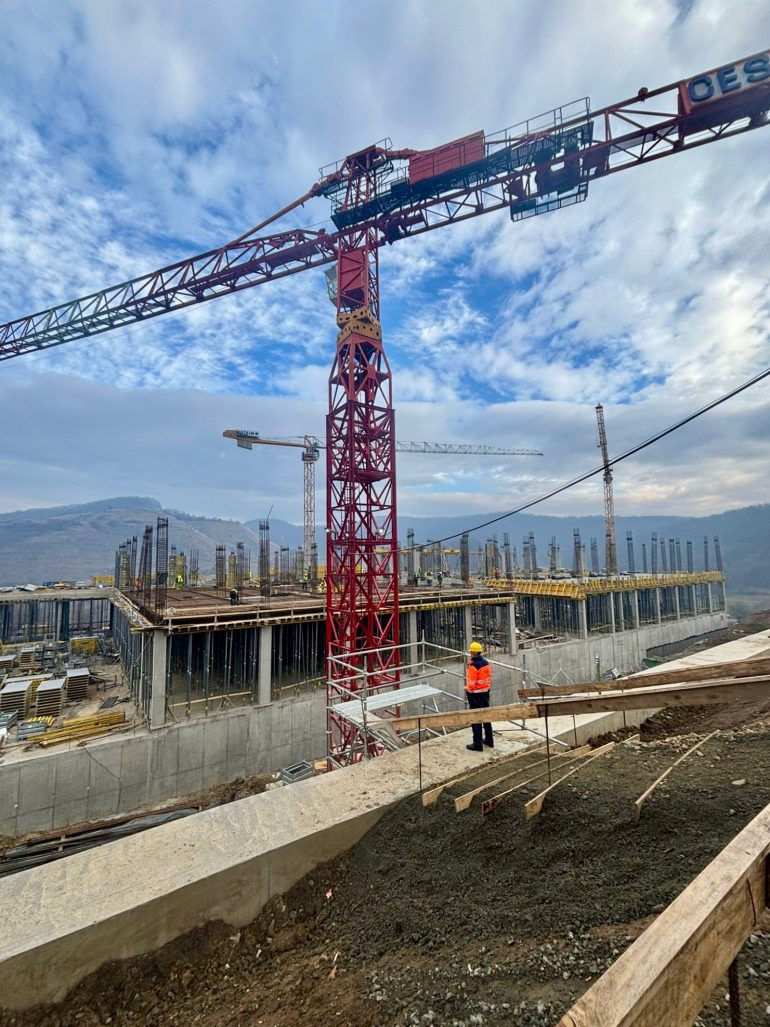
The Transylvanian winter tests both materials and team. Snow blankets the meadow, yet work continues under crisp blue skies. Cranes pivot against forested ridges while workers in high-visibility gear navigate scaffolding wrapped in protective sheeting. These images capture something essential: a building forged alongside the seasons, not despite them. Furthermore, rainwater now runs off freshly sealed surfaces into the on-site retention basin. This marks the first rehearsal of sustainability measures built into the design.
Collaboration on the Ground
Site engineers and conservation consultants form the multidisciplinary team that shepherds this project. Together, they remain active through technical design at every pour and inspection. In addition, regular site visits ensure the museum’s stringent conservation standards translate from BIM model to built reality. As a result, we see a structure that honours its drawings. Its tolerances and finishes will support climate-controlled environments for centuries of scholarship.
What Lies Ahead
In the coming months, workers will cast the terracotta-pigmented façades. This will transform the grey skeleton into the warm, earthy landmark we first revealed in our renderings. Additionally, the carved-earth amphitheatre will take shape, sculpted into the hillside. The generous portico will frame the arrival court. Soon, the gentle bridge will connect the meadow to a double-height foyer washed in amber light.
Historical Museum Complex of Transylvania — where history, landscape and contemporary architecture converge. We at UNITH2B are honoured to document this journey and invite you to watch as the past inspires the future, one pour at a time.